

Summary
From 1 October 2026, home electricity in Great Britain has no VAT until 31 March 2027. Public EV charging stays at 20%. Here is the cost gap.
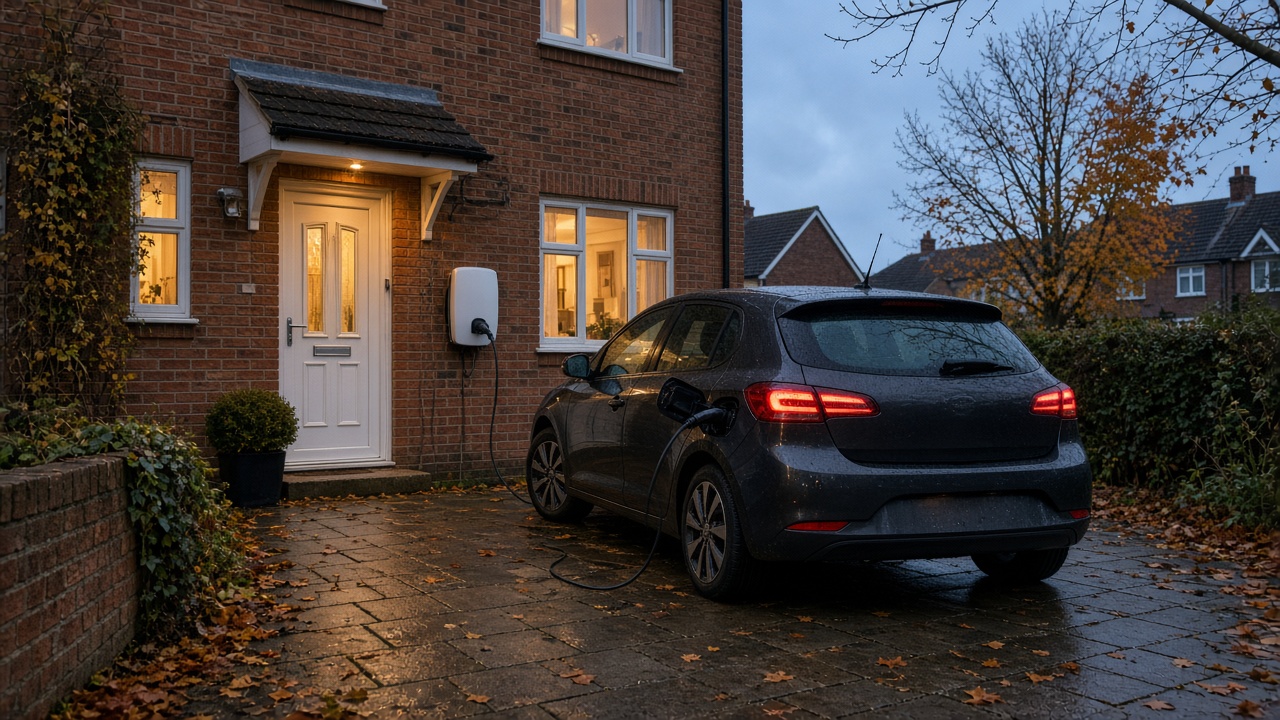
From 1 October 2026 to 31 March 2027, VAT on domestic electricity in England, Scotland and Wales is 0%. Public EV charging is still 20%. Before October, home electricity was 5% and public charging was 20%, so the VAT gap has gone from 15 percentage points to 20.
The short answer. HM Treasury set VAT on qualifying domestic electricity in Great Britain to 0% from 1 October 2026 to 31 March 2027. Gas and other domestic fuels stay at 5%. Northern Ireland’s electricity stays at 5%.
The change was announced on 21 July 2026. Households do not apply for it. Suppliers charge the new rate on qualifying supplies. HM Treasury’s note says the bill saving depends on suppliers passing the VAT cut through, and that people in Northern Ireland are not covered.
Ofgem’s price cap for the same dates is £1,723 a year for a typical household paying by Direct Debit in England, Scotland and Wales, which is 4% higher than the July to September cap. The average electricity unit rate is 26.32p per kWh and the average daily standing charge is 54.83p. In the previous cap those figures were 26.11p per kWh and 57.19p a day. Ofgem says the two periods cannot be compared directly, because electricity in the new cap has no VAT and the earlier figures included 5%.
The short answer. Under the October to December 2026 cap, the average Direct Debit electricity rate is 26.32p per kWh, and that price has no VAT on the electricity.
That is the cap on a standard variable tariff, averaged across regions. Your unit rate can differ if you pay by standard credit or a prepayment meter, or if you are on a fixed deal. The standing charge is a daily fee. You pay it whether or not the car is plugged in, so the extra cost of charging is almost all in the unit rate.
An overnight EV tariff can be much lower than the cap. Zapmap describes a typical off-peak home rate as around 8.9p per kWh. That is a tariff choice, not the price cap, and it is not available on every meter.
Using 4 miles per kWh as a worked example, 26.32p is about 6.6p a mile. At around 8.9p per kWh, the same example is about 2.2p a mile. Real efficiency varies with the car, the weather and how you drive.
The short answer. In September 2026, Zapmap’s weighted average pay-as-you-go price was 54p per kWh on standard and standard-plus chargers, and 79p per kWh on rapid and ultra-rapid chargers.
Standard and standard-plus means 3kW up to 49kW. Rapid and ultra-rapid means 50kW and above. The averages come from usage across about 75% of UK public chargers, and Zapmap updated the index on 7 October 2026. Pay-as-you-go is the price without a membership. Zapmap says many drivers pay less than these averages when a network has a deal. It gives Sainsbury’s Smart Charge at 72p, Believ at 66p, Tesla sites open to any driver at an average of 69p, and Tesla drivers on the Supercharger network at an average of 48p. The index is up by about 4% on a year earlier for both groups. The figures are from the Zapmap Price Index.
HMRC’s position, restated on 12 May 2026, is that electricity from a public charge point is standard-rated at 20% VAT. A tribunal had found for a charge-point operator on a narrower reading of the domestic-use rules, and HMRC said it was seeking permission to appeal. The published policy for drivers has not changed. The October zero rate is for qualifying domestic electricity in Great Britain. It does not cover these public supplies.
On a price that already includes 20% VAT, the tax is one sixth of what you pay. That is 9p of the 54p slower average, and about 13.2p of the 79p rapid average. Those two figures are our calculation from Zapmap’s published averages, not a separate Zapmap statistic.
The short answer. On the rates above, 40kWh costs £10.53 at home on the price cap, £21.60 on the slower public average, and £31.60 on the rapid average.
The rapid top-up is about three times the home price on the cap. The slower public top-up is about twice the home price. At Zapmap’s around-8.9p off-peak home example, the same 40kWh is about £3.56. That is a tariff you have to be on, not the cap. None of these figures include a public connection fee, an overstay fee, or the standing charge at home.
At 4 miles per kWh, the same three rates are about 6.6p, 13.5p and 19.8p a mile. That efficiency is a worked example so the prices can be compared. It is not a claim about every car.
The short answer. The zero rate does not apply in Northern Ireland, and it does not apply to public charge points. A driver who cannot charge at home still pays the public price.
Ofgem’s 26.32p figure is for Great Britain. A fixed tariff can sit above or below the cap, and it does not have to move just because the cap moved. If your supply is partly for a business, the domestic relief may not cover all of it. The measure ends on 31 March 2027. HM Treasury’s note says suppliers then change the rate from 0% back to 5%.
The short answer. The useful number is your mileage, not the national average. The savings calculator applies home and public rates to the miles you actually drive.
If most of your charging can happen on the driveway, this is the period when home electricity in Great Britain carries no VAT and public charging still carries 20%. You can get a quote for a home charger, or run your miles through the calculator first.