

Summary
On the rates in our savings calculator, petrol is about 19p a mile, home charging on a standard tariff is about 6.6p, and an overnight EV tariff is about 2p. For a typical 600 miles a month that is about £114 on petrol and about £12 charging overnight at home. The calculator applies those rates to your own mileage.
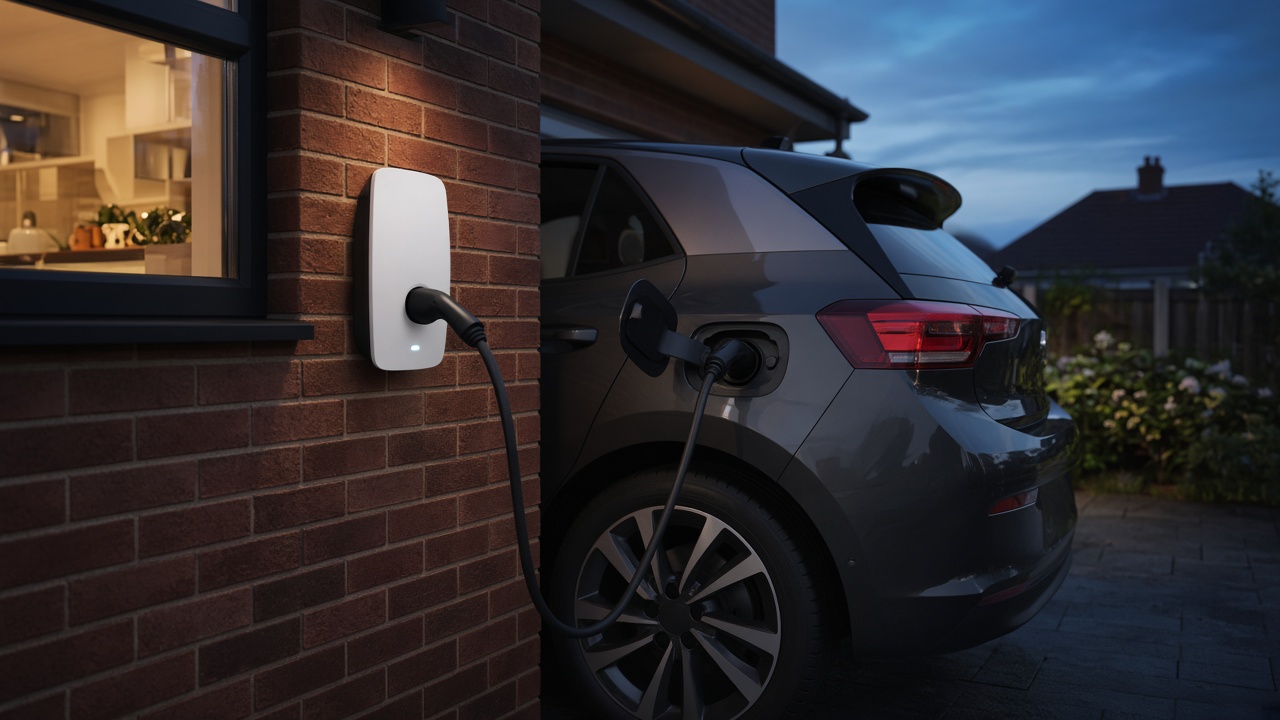
Petrol, a standard home tariff and an overnight EV tariff do not cost the same thing per mile. The gap is large enough to matter every month, and it depends on how far you drive. This is the comparison our savings calculator starts from, with the rates it was using on 8 September 2026. Put your own mileage in and it shows the figure for your car.
The short answer. At 4 miles per kWh, home charging is about 6.6p a mile on a standard tariff and about 2p a mile overnight.
The standard rate in the calculator is the Ofgem price cap for October to December 2026, about 26.32p per kWh. Divide that by a typical 4 miles per kWh and a mile costs about 6.6p.
An overnight EV tariff is not the price cap. The calculator uses an indicative 8p per kWh. At the same 4 miles per kWh, that is 2p a mile. The exact rate depends on your supplier and where you live.
The short answer. At the UK average of 165.5p a litre on 7 September 2026, petrol is about 19p a mile for a typical family car.
That 19p figure lands at about 40 miles per gallon. A UK gallon is 4.546 litres, so 165.5p a litre at 40 mpg is just under 19p a mile. A thirstier car at 35 mpg is closer to 21p. A 50 mpg car is closer to 15p.
Most family cars sit between 35 and 50 mpg. The calculator asks for yours, so the petrol side is your car rather than a national average.
The short answer. The average UK driver does about 600 miles a month. On these rates, overnight home charging is about £12 and petrol is about £114.
Those are fuel costs for the miles, not the price of a charger, insurance or servicing. They also assume every mile is paid for the same way. Most people with a driveway do 90% or more at home, and the calculator lets you set that split.
The short answer. Mileage, miles per gallon, how efficient the car is, and whether you charge overnight.
If you already drive electric, choose that option in the calculator and it compares home charging with the public network instead of petrol.
The short answer. waEV-smart can pay you back up to £15 a month from the second month, plus a £20 welcome credit after 30 days of smart charging.
The app moves the overnight charge to when power is cheapest and the grid can use the demand. The £15 is an up-to figure. It depends on how often you charge and what the grid needs that night. The £20 welcome credit is a fixed amount, once you are eligible.
You need a waEV charger, the free app, and a half-hourly smart meter. There is no subscription. Supplier-controlled tariffs such as Intelligent Octopus Go and OVO Charge Anytime are not compatible, because they already control the charge.
The figures above are the national ones the calculator starts from. Your miles, your mpg and your tariff change the answer.
It takes about 30 seconds. There is no email and no sign-up. Open the savings calculator and it shows the monthly cost on petrol, the cost with a waEV charger, and what waEV-smart could pay back. When you want the installed price, get a quote.